Tiny Museums, Big Lines: Why America’s Weirdest Little Attractions Are Packing Them In
The best road-trip stop in America might be a former dentist’s office with 4,000 salt shakers and a hand-lettered sign that reads Please Do Not Lick the Exhibits. That is not a joke. It is a business model. Across the country, micro-museums — tiny, hyper-specific attractions devoted to mustard, telephones, funeral history, accordions, neon signs, and other obsessions — are drawing lines that would make a mid-size art museum jealous. In 2026, the weird little museum is not a roadside novelty. It is the main event.
These places are small by design. A few rooms, a hallway, sometimes a converted garage. You can see the whole thing in 45 minutes and still make it to the diner before the lunch rush. That is the point. The micro-museum boom is not about bigger, louder, or more immersive. It is about narrow, strange, and personal. And somehow, that is exactly what people are lining up for.
The Power of Being Absurdly Specific
General-interest museums ask you to care about everything. Micro-museums ask you to care about one thing very, very much. A mustard museum can trace seed varieties, label design, and regional recipes. A telephone museum can explain why a rotary dial sounds like a tiny robot clearing its throat. A funeral history museum can be somber, strange, and oddly comforting all at once. The specificity is the hook. You do not need a PhD to enjoy it. You just need curiosity and maybe a soft spot for weird packaging.
That is also why these places travel well on social media. A room full of vintage phones or a wall of funeral coaches is immediately legible. You do not need context to understand why it is interesting. You just need to see it. The internet has spent years teaching people that niche is not a bug. It is a personality. Micro-museums are that idea with a gift shop.
Small Rooms, Small Budgets, Big Personality
The economics are almost aggressively sensible. Many micro-museums operate in former storefronts, garages, church basements, or donated buildings. Overhead is low. Collections are often donated or built over decades by one person. Docents are volunteers, retirees, or the founder’s very patient family. Tickets tend to land in the $5 to $12 range, and the gift shop does a lot of quiet lifting.
That low overhead matters. It means a museum does not need blockbuster attendance to survive. It needs a steady trickle of curious people, a few school groups, and maybe one viral video a year. It also means the experience can stay weird. There is no corporate board asking why the exhibit on mustard packets needs a diorama. There is just a person who believes the diorama is essential, because it is.
The result is a category of attraction that feels handmade in the best way. Some are polished. Some are wonderfully janky. Some are basically a collection with a cash box and a laminated sign. That range is part of the appeal. You never quite know what you are walking into, and in a world of predictable theme-park queues, that is a feature.
The TikTok Effect
Viral attention has changed the game. A single clip of a wall of vintage phones, a room of unsettling funeral artifacts, or a shelf of mustard bottles arranged by color can send a family minivan caravan toward a town nobody had on their bingo card. The algorithm loves a contained, visual, slightly unhinged story. Micro-museums are built for that: one room, one theme, 100 photo ops.
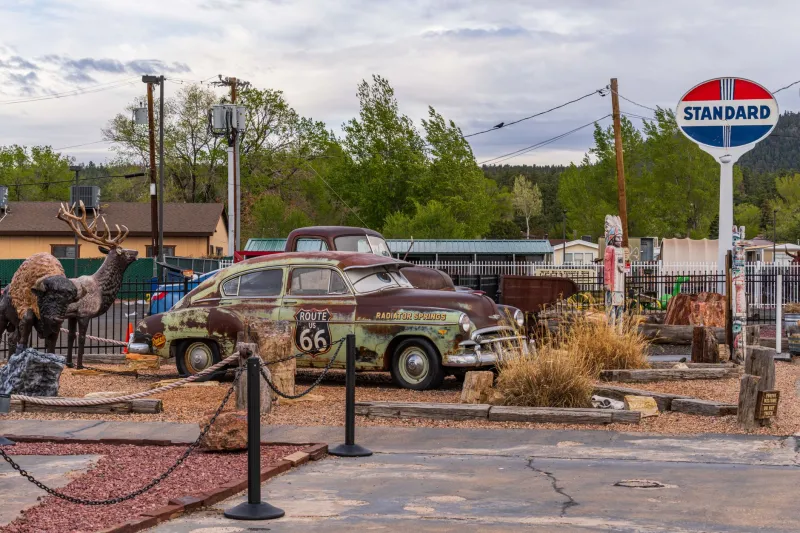
But the attention is not only online. It is turning into actual road-trip stops. People are looking for detours that feel discovered rather than advertised. A tiny museum fits neatly between a gas station and a barbecue joint. It is affordable, quick, and anecdote-ready. You can be in and out before the kids mutiny, and you leave with a story about the world’s largest collection of something you did not know existed.
The Small-Town Multiplier
When a micro-museum lands in a small town, it can become an anchor. Visitors buy gas, coffee, pie, antiques, and last-minute souvenirs. Local businesses lean in with signs, extended hours, and themed menus. A town that was once a pass-through becomes a pit stop. A pit stop becomes a destination. A destination becomes a reason to repaint the downtown.
That multiplier effect is why some local leaders now treat oddball attractions as economic development. It is not a silver bullet, and it will not replace a factory or a hospital. But it can put a town on the map in a way that feels authentic. The National Mustard Museum in Middleton, Wisconsin, has been doing this for years. The National Museum of Funeral History in Houston has turned a niche subject into a real draw. Smaller telephone museums, accordion museums, and local history collections are following the same playbook at a fraction of the scale.
What to Know Before You Go
Check the hours before you drive. Many micro-museums are volunteer-run and open on weird days. Bring cash, because card readers are not always part of the dream. Respect the collection, even if it looks like a pile of junk to you. And do not expect Disney-level polish. Expect a person who really, really wants to tell you about mustard.
That is the deal. You give a small museum an hour and a few dollars. It gives you a memory that is not available on a streaming service. In 2026, that trade feels better than ever.