Arcade Afterlife: Why Dead Malls Are Becoming Gen Z’s Favorite Retro Hangouts
On a rainy Friday night in 2026, the food court is dark, the escalator is stopped, and the old department store smells faintly of carpet glue and popcorn. Then someone flips a breaker. A row of CRT monitors hums to life, a Teenage Mutant Ninja Turtles cabinet blinks, and a line of twenty-somethings in vintage windbreakers cheers like a sports bar during overtime.
The American mall was supposed to be dead. Instead, it is getting a second life as a retro arcade, a vintage computer festival, and a neon-lit backdrop for the kind of photos that make your group chat say "where is this?" Welcome to the arcade afterlife, where the anchor store is no longer selling discount sweaters. It is selling nostalgia by the token.
The Anchor Store Is the New Arcade Floor
For decades, the department store was the mall's gravitational center. You entered through it, got lost in it, and bought a candle you did not need in it. Now, empty anchor spaces are becoming pop-up arcades with names like "Pixel Mall" and "Dead Cabinet" — the kind of places that pop up for a weekend, a month, or a whole summer, depending on the lease and the fire code.
The setup is part flea market, part museum, part basement rec room. Organizers haul in vintage cabinets, string extension cords across the tile, and hang hand-painted signs over the old perfume counters. Some events focus on classic arcade games. Others lean into vintage computing: beige monitors, floppy disks, and grown adults explaining why the Commodore 64 was actually a big deal. There are tournaments, repair workshops, and vendors selling cartridges that smell like someone's attic.
The appeal is not just the games. It is the space. A dead mall has a particular atmosphere — liminal, slightly haunted, weirdly peaceful. The escalators still hum. The fake plants are still fake. The mall directory still lists a store that closed years ago. For a generation raised on screens, walking through that emptiness feels like stepping into a level they have only seen in videos.
A Quick List of Weird Games and Mall Finds
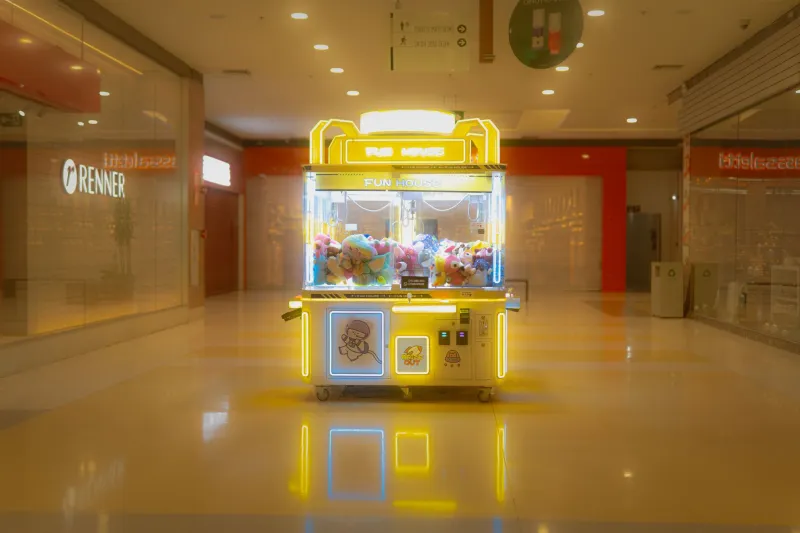
Part of the fun of these pop-up arcades is the scavenger hunt. You never know what cabinet is going to be wedged between the old sunglass kiosk and the pretzel stand. Some favorites from the retro gaming circuit:
- The laserdisc oddball. A game that plays like a movie with a controller glued on. The graphics are grainy, the acting is worse, and the line is always weirdly long.
- The sit-down racing cab with one working speaker. You cannot hear the engine, but you can hear your own regret.
- The trackball classic. A game that reminds you why your wrist hurts and why you love it.
- The rhythm game from Japan. A cabinet covered in stickers, with a difficulty curve that starts at "fun" and ends at "call a doctor."
- The mystery cabinet. No label. No instructions. Just a joystick and a screen that says "INSERT COIN." You put in a token. You become a legend or a cautionary tale.
Then there are the mall finds that have nothing to do with gaming. A perfectly preserved payphone. A mall carpet pattern that looks like a fever dream. A food court pretzel that tastes exactly like 2004. A directory with a store called "Things Remembered" that now feels like a threat. The best pop-up arcades lean into that texture. They do not try to make the mall look new. They let it look old.
Why Gen Z Loves a Mall That Feels Slightly Abandoned
The easy answer is nostalgia. But Gen Z is nostalgic for an era many of them did not live through. They grew up with smartphones, streaming, and the slow collapse of the mall as a social hub. The dead mall is not a memory for them. It is a mood.
That mood has a name: liminal space. It is the feeling of a place that is between things — empty but not abandoned, familiar but wrong, a hallway that seems to go on forever. Dead malls are liminal-space royalty. The lighting is fluorescent. The sounds are muffled. The escalators lead nowhere. On TikTok and Instagram, that aesthetic performs beautifully. A video of an empty mall with a synth soundtrack can rack up more engagement than a big-budget ad campaign.
But there is something else going on. Gen Z is also looking for third places — spaces that are not home and not work, where you can hang out without spending a fortune. A pop-up arcade in a dead mall fits that bill. It is affordable, social, and slightly weird. You can bring friends, take photos, play a few games, and leave without feeling like you have been upsold. The mall, once the ultimate consumer temple, is now a place where you can just exist.
The Nostalgia Economy Has a Cover Charge
Of course, none of this is accidental. The nostalgia economy is real, and it is profitable. Vintage arcade cabinets have become collector's items. Retro gaming events sell tickets. Landlords who could not fill an anchor store with a mattress chain are happy to rent it to a pop-up for a weekend. The dead mall has become a venue, and the venue has become a brand.
That is not necessarily bad. Pop-up arcades can bring foot traffic back to struggling retail centers, even if only temporarily. They can create community around old games and old machines. They can turn a vacant space into something people talk about. But there is a fine line between celebrating a place and turning it into a backdrop. The best events respect the weirdness of the mall instead of sanding it down. They keep the ugly carpet. They leave the old signs. They let the place be what it is.
The Mall Was Never Just Stores
The strange afterlife of the American mall makes sense when you remember what it was supposed to be. It was not just a place to buy things. It was a place to be seen, to kill time, to meet friends, to escape your parents. The stores were the excuse. The space was the point.
In 2026, that space is being reused in ways that feel both ironic and sincere. A dead department store becomes an arcade. A food court becomes a photo op. A mall rat becomes a retro gamer. The cycle continues, just with more CRT glare and fewer pretzel calories.
So if you see a line of people waiting outside an empty Sears for a chance to play a game you have never heard of, do not laugh. They are not just chasing nostalgia. They are claiming a little piece of American retail history, one token at a time. And honestly? That is a better use for a dead mall than another mattress store.