Still Ringing: The Volunteer Cartographers Racing to Map America’s Last Payphones
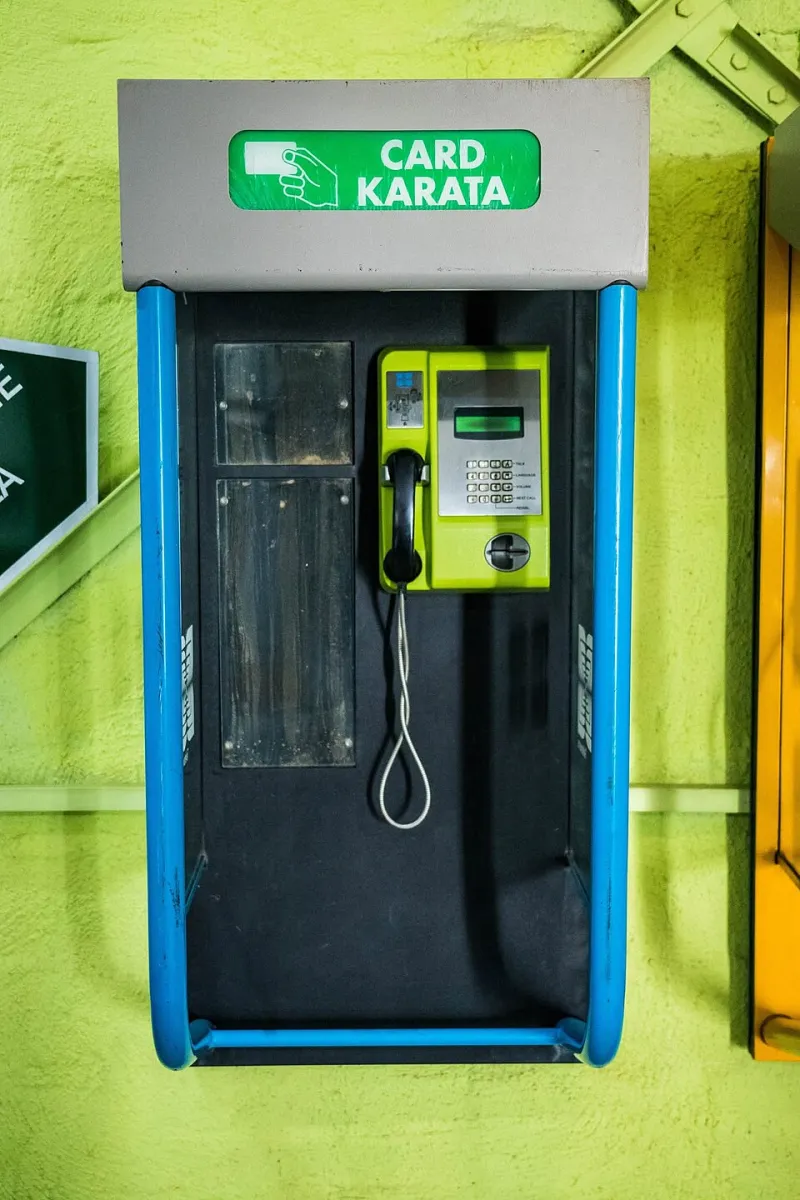
Photo: Squishypaw, CC BY-SA 4.0, via Wikimedia Commons
There is a specific sound a payphone makes when it's about to give up on you: one ring, a click, then the flat hum of a line that's technically alive but has nothing left to say. If you've heard it recently, you may have stumbled onto something rarer than you think.
Across the country, a scattered crew of hobbyists, retired telecom workers, and local history buffs is quietly cataloging the payphones that still work. Not the dead shells bolted to a wall outside a shuttered drugstore — the actual functioning ones. The kind where you lift the receiver, hear a dial tone, and feel briefly like you've time-traveled to 1994.
They're building maps, trading coordinates in group chats, and occasionally driving three hours to confirm that yes, the phone at the back of a rural general store still takes a quarter.
The Sound of a Dying Species
At their peak in the late 1990s, payphones numbered in the millions in the US. Today, by most counts, fewer than 100,000 remain — and the number that actually accept a call is smaller still. Carriers have been pulling them for years, and each removal is permanent in the way that only infrastructure can be.
That's the urgency driving the mapmakers. Their pitch isn't sentimental so much as practical: nobody knows how many are left, because nobody is required to count them. So they count them themselves.
The hobby has its own vocabulary. A "live" phone has a dial tone. A "shell" is a housing with no line. A "hot" phone is one that still takes coins. And a "ghost" is the frustrating middle ground — it rings, but nothing happens.
Most of the volunteers are not organized in any official sense. They're people who started with one photo and kept going.
Who Actually Does This
You'll find them in a few recognizable types.
The retired lineman. He spent thirty years climbing poles and now spends Saturdays photographing the boxes he used to service. He can tell you the carrier from the enclosure style alone.
The small-town archivist. Usually attached to a historical society, usually the only person who noticed the phone booth on Main Street was about to disappear into a dumpster.
The road-tripper. Treats payphones the way other people treat roadside diners — a reason to pull off the highway. Has strong opinions about which ones are worth a detour.
The completist. Keeps a spreadsheet. Has a spreadsheet for the spreadsheet.
What unites them is a shared suspicion that these things are worth documenting before they're gone, and a shared annoyance that the official record is basically nonexistent.
Six Payphones Worth a Detour
The map changes constantly, so treat any list as a snapshot. But certain phones keep showing up in the community's chatter — the ones people drive out of their way for.
The one at the end of the road. A stretch of rural highway where the phone is the last structure before the pavement gives out. Cell signal dies a mile earlier. It is, functionally, the only way to call for help — which is exactly why the county has kept it.
The booth with a bookcase. A volunteer-maintained booth in a small town that has been repurposed into a tiny free library, with the phone still humming on the wall beside it. Two obsolete things keeping each other company.
The one inside the diner. Back by the restrooms, past the pie case. Still takes coins. Still has a laminated list of local numbers taped above it, including one for a plumber who retired in 2011.
The mountain pass phone. High elevation, no service, wind that will take your hat. The kind of phone that exists for one reason and has probably saved a life or two.
The one on the courthouse lawn. A booth so thoroughly absorbed into local identity that removing it would cause a council meeting argument. It has been repainted at least twice.
The beach phone. Salt-rusted, half-sandblasted, still working. The receiver smells like the ocean. Nobody is sure who pays the bill.
Why Towns Keep the Cord
The easy answer is nostalgia, and that's part of it. A working payphone is a photo op, and photo ops draw people who buy coffee.
But the harder answer is that some of these phones are load-bearing. Rural stretches without cell coverage still depend on them. Emergency planners have argued for keeping them in places where the network doesn't reach. And in a handful of towns, the payphone is the only public phone that doesn't require a charged battery, an account, or a signal bar.
There's also the simple bureaucratic inertia of a small municipality that has never gotten around to it. Which, in this case, is a gift.
How to Spot One — and Log It
You don't need gear. You need a quarter and fifteen seconds.
Lift the receiver. Dial tone means live. A recorded message means the line exists but the phone is out of service. Silence means it's a shell.
If it works, take a photo of the phone, a photo of its surroundings, and note the cross streets. Volunteers want context as much as coordinates — a booth's story usually lives in what's around it.
Then submit it. Most of the map projects take public tips through a form or an email address on their site, and a good submission with clear photos often gets verified and pinned within a few weeks.
A few etiquette notes from the people who do this constantly: don't pry open coin boxes, don't unplug anything, and don't block a working phone for a photo shoot. Somebody might actually need it.
The Payoff Is a Dial Tone
The strange appeal of this hobby isn't the object. It's the moment. You pick up a receiver that has been hanging there for decades, and it answers.
That's the whole treasure hunt, really — not the map, not the spreadsheet, not the bragging rights. Just a dial tone in a place you didn't expect one, and the brief, unreasonable joy of knowing you could call anyone in the world from a box on the side of a county road.