Page 47, 'Lemon Fluff': The Thrift Hunters Turning Church Cookbooks Into Buried Treasure
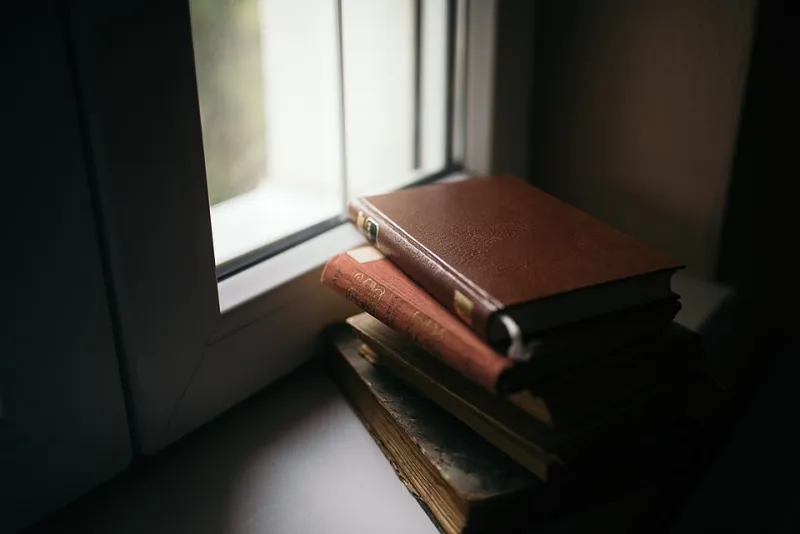
Photo: Shixart1985, CC BY 2.0, via Wikimedia Commons
Every thrift store in America has the same shelf. It sits near the back, past the romance paperbacks and the abandoned diet books, and it holds a crooked row of spiral-bound spines with titles like Bless This Food, Cooking With the Saints, and What's Cookin' at First Baptist. Most shoppers walk right past it. A small, increasingly loud group of people do not.
Call them cookbook hunters. They are the people crouched on the tile floor of a Goodwill in Ohio at 10 a.m. on a Tuesday, thumbing through a 1987 church fundraiser looking for a recipe attributed to a woman named Marge, because Marge's bars are legendary and Marge's grandchildren have been looking for that page for eleven years.
Welcome to the least glamorous gold rush in America.
The Shelf Nobody Was Watching
The appeal starts with sheer volume. Community cookbooks — the ones sold by churches, Junior Leagues, VFW auxiliaries, school bands, and hospital guilds — were printed by the millions from the 1950s through the 1990s. They were cheap to make, locally distributed, and rarely catalogued anywhere. Most were spiral-bound or stapled, which means they shredded themselves into history at a remarkable rate.
That combination — huge print runs, terrible durability, zero documentation — is exactly what makes a genre collectible. Nobody saved them on purpose. Which is why the ones that survived feel like found objects rather than products.
'It's the only genre where the value is basically accidental,' says one longtime hunter who runs a swap group out of Kansas City. 'You're not buying a book. You're buying a Tuesday night in 1974 in a church basement in Nebraska.'
The Weird Stuff Is the Whole Point
Let's be honest about what's actually in these things. Some of it is genuinely great home cooking: molded salads, sheet cakes, casseroles built on a can of soup and a prayer. Some of it is unhinged. Hunters trade screenshots of recipes with ingredient lists that read like a dare — gelatin and hot dogs, mayonnaise in places mayonnaise should never be, a 'Cheese Dream' that contains neither cheese nor dreams in any recognizable form.
The oddball pages are the social currency of the scene. A group will spend an afternoon debating whether 'Jellied Tomato Bouillon' was ever served at a wedding, or whether a recipe calling for 'one small bottle of ketchup' meant something different in 1962. The jokes write themselves. The point isn't mockery, though — the general mood in these communities is affectionate. Nobody's laughing at your grandmother. They're laughing with her, and then they're making her cake.
What Collectors Actually Fight Over
Here's where it gets competitive. Most community cookbooks are worth a couple of dollars, tops. A handful are not.
- Named Junior League titles. Certain league cookbooks — the ones with real editorial polish and a reputation — have been quietly reselling for years and still command real money online.
- Regional and ethnic church collections. A Greek Orthodox or Mennonite or Creole parish cookbook from a specific community, especially one that's since closed or dispersed, is a document as much as a cookbook.
- Anything with local advertising. Those little boxed ads for a since-demolished hardware store or a funeral home are half the charm, and researchers love them.
- Hand-typed or mimeographed editions. The earlier and scrappier the production, the more interesting it is. A stack of typed pages stapled by a church secretary in 1961 is a different object than a 2004 print-on-demand reprint.
- Intact spiral and readable pages. Grease stains? Fine, arguably good. Missing pages 12 through 40 because the binding exploded? Not fine.
The single best tell is a contributors index with full names. That's the difference between a cookbook and a census record.
The Family-History Angle
Which brings us to the part that has quietly turned this hobby into something closer to a public service. People are hunting these books for names. A granddaughter in Oregon hears that her late grandmother's recipe appeared in a 1978 Lutheran fundraiser in Iowa, and she starts posting in groups, and somewhere a stranger in a Des Moines apartment goes, 'Hold on, I have that one.'
Scans get traded constantly. Some groups keep shared folders organized by state and denomination. It's crowdsourced genealogy with a dessert course, and it costs nothing but a phone camera.
How to Hunt Without Wrecking Your Kitchen
A few practical rules from the people who do this weekly:
- Flip to the contributors list first. Names, town, year — that's your metadata.
- Check the copyright page for a printing year. Undated books are usually older than you think.
- Ignore condition panic. A stained, dog-eared copy with handwritten notes in the margin is often the better find.
- Buy the local one, not the famous one. You can order the celebrated Junior League book anytime. You cannot order the 1983 fundraiser from a church that closed in 2009.
- Scan it before you shelve it. Future you, and possibly a stranger's family, will be grateful.
A Small Economy Built on Paper
There's a nostalgia market here, obviously — the same one driving vintage Pyrex and old diner menus. But the spiral-bound boom feels different. It's not about owning a piece of the past so much as reading it, cooking from it, and passing the good pages along.
Also, frankly, it's cheap. In a year when everything costs more, a two-dollar cookbook with 300 recipes and a decent chance of a genuinely great bar cookie is one of the last honest deals in retail.
So next time you're in a thrift store and you see that crooked row of spirals, stop. Pull one out. Find the page with the most grease on it. That's the one the family actually ate.
Somebody's Marge put it there for a reason.