Someone's Grandma Is in That Shoebox: The Internet Sleuths Reuniting Strangers With Lost Photos
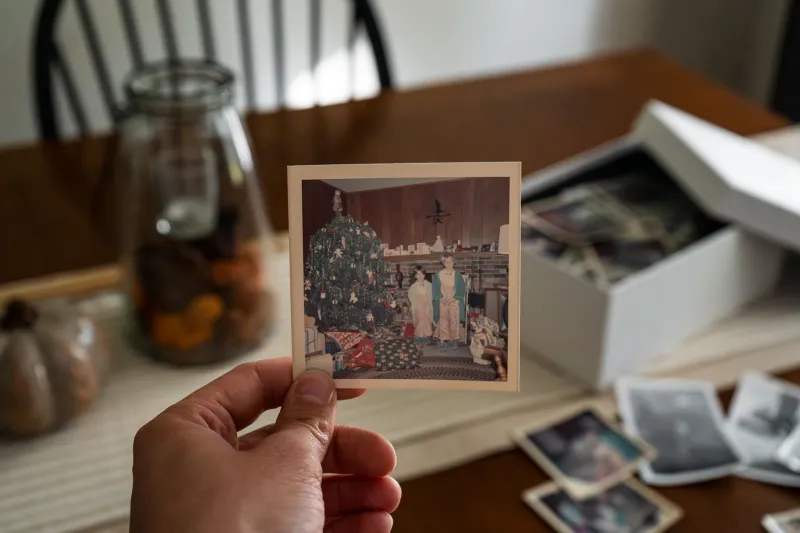
There is a specific silence inside a shoebox of other people's vacation photos. It smells like cedar and old paper. Somewhere near the bottom, a Polaroid is labeled in ballpoint: Barb & Denny, summer '74. Nobody in the room knows who Barb is. Somebody just paid four dollars for her.
This happens more often than you'd think. Across the country, estate-sale pickers, storage-unit gamblers, flea-market regulars, and genealogy hobbyists are buying up boxes of abandoned family pictures — and then spending hours, sometimes months, trying to hand them back to the families that lost track of them. There's no company behind it. No app with a funding round. Just a loose web of subreddits, Facebook groups, TikTok accounts, and one stubbornly old-school website that has been doing this since dial-up.
The box economy
Photographs get orphaned for boring reasons. A parent dies and the kids live in three different states. A house gets cleared out in a weekend because the closing date is Monday. Somebody scans the good stuff, uploads it to a cloud account nobody will ever open again, and the physical prints go into a cardboard box marked FREE.
Auction regulars call these boxes "paper lots" and usually they're the cheapest thing at the sale. That's the strange part of the whole hobby: the barrier to entry is almost nothing. You can be a full-time picker or a person with a Tuesday off and a five-dollar bill.
Meet the photo detectives
The scene has its own geography. On Reddit, forums like r/FoundPhotos fill up with scans of portraits, class pictures, and mystery weddings, each one posted with a hopeful caption and a plea to share it around. On Facebook, regional groups devoted to reuniting lost images with families trade tips on handwriting analysis and estate-sale leads. On TikTok, a handful of accounts have built real audiences out of one genre: the moment a stranger opens a message and sees their great-grandmother's face.
The actual detective work is unglamorous and deeply nerdy. Veterans read the backs of prints for names and dates. They squint at photographer's stamps on the border, which can pin a picture to a specific studio in a specific town. They clock license plates, military uniforms, church signs, and the year a particular model of station wagon was on the road. Yearbooks, census records, obituary archives, and newspaper databases fill in the rest. Google Lens gets used a lot. So do the old-fashioned phone calls.
Genealogists have a term for this material: orphan photographs. A whole niche of the family-history world is built around them, including a long-running site where people list unidentified portraits in the hope that a descendant will come searching. The tools got dramatically better in the last decade, but the bottleneck is still human — you need somebody who recognizes a face.
The unofficial rulebook
The community has developed a code, mostly through trial and error. Don't post full names of people who might still be alive. Don't show up at a stranger's door with a box. Ask before you mail anything. And don't buy photos purely to flip them, which is the fastest way to get quietly frozen out of every group.
There's also a philosophical split. Some hunters will only keep going if they can find a direct descendant. Others believe a picture just needs to land with someone who cares — a second cousin, a local historical society, a town museum with a soft spot for the old days. And a few keep what they call the wall of unknowns: unidentified faces they couldn't crack, framed anyway, because throwing them out felt wrong.
Why this corner of the internet feels so good
Most viral content is engineered to make you feel something fast and then forget it. These posts work differently. They're small, they're solvable, and they come with an ending — a name, a phone call, sometimes a video of two strangers crying in a driveway.
That's the appeal, honestly. The internet is mostly an argument. This is a puzzle with a friendly finish line. There's no villain, no discourse, no takes. Somebody's grandmother gets her name back, a family gets a piece of itself returned, and a picker gets to feel like a detective for a week. The stakes are tiny and the payoff is real, which is a combination that's in short supply right now.
The ones that stay lost
Not every box gets solved. Some photos sit in a plastic bin for years because the trail died at an unmarked grave in a county with no digitized records. The hunters will tell you that's part of it too — that the mystery is the point, and a picture of a stranger is still a picture of somebody's ordinary Tuesday.
So the boxes keep circulating. Estate sale to flea market to a kitchen table in another state, scanned and reposted, handed along by people who have no claim on any of it. If you ever find yourself staring down at a shoebox marked FREE, do the internet a favor: pull out the one with writing on the back, take a photo, and post it. Barb might still be out there.