Clerk Cam: How Small-Town Council Meetings Became America’s Binge-Watch
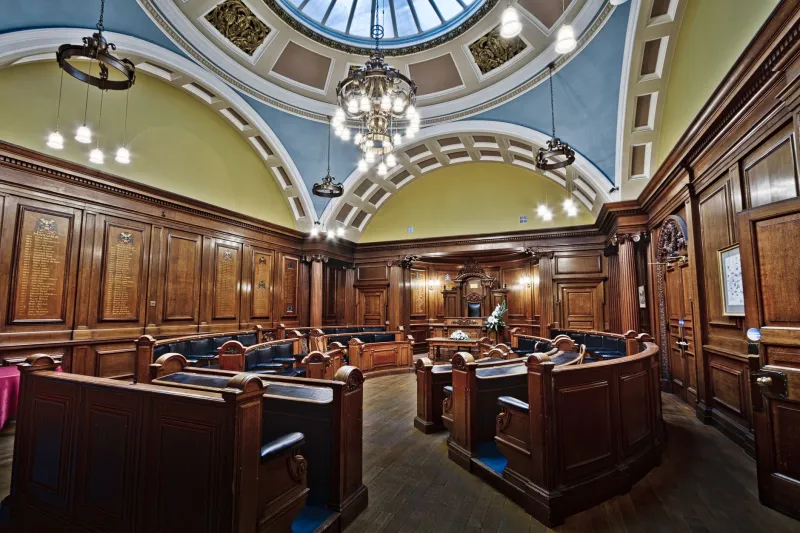
At 7:02 p.m. on a Tuesday, a city council chamber in a town most Americans could not place on a map goes live. The agenda is zoning, a sewer easement, and a request to add a chicken to the backyard. By 7:19, someone is asking whether the chicken is an emotional support animal. By 7:24, the clip is on its way to a million views.
That is the strange new rhythm of local government in 2026. Council meetings were once the kind of public-access TV you flipped past on the way to a weather report. Now they are bingeable. Clips of bizarre public comments, procedural squabbles, and small-town feuds circulate like episodes of a reality show that nobody planned. The production values are terrible. The stakes are tiny and enormous at the same time. And that is exactly the point.
The Accidental Green Room
Most of these meetings are not trying to be entertaining. They are trying to be compliant. A camera sits in the back of the room, a clerk reads the rules, and a mayor asks everyone to mute their phones. Then the public comment period begins, and the Sorkin-style walk-and-talk turns into a neighborhood group chat with a gavel.
What changed is distribution. Livestreams, archived YouTube channels, and short-form clip accounts have turned municipal meetings into searchable content. A dispute over a fence height can travel farther than the fence ever will. A resident who shows up with a handmade diagram can become a recurring character. A council member's sigh can become a reaction image by breakfast.
Unlike the polished reality shows that dominate streaming, these broadcasts have no confessional booth and no producer pulling strings. They have a speaker and a three-minute time limit. That combination is volatile, funny, and occasionally deeply sincere.
Why We Can’t Look Away
Part of the appeal is authenticity fatigue in reverse. Audiences are tired of shows that pretend to be unscripted. A council meeting is unscripted by law. Nobody is there to become famous, at least not at first. They are there because a drain is backing up, a developer wants a variance, or a dog has been barking since March.
The humor comes from the collision of bureaucratic language and human behavior. A resident will use the phrase 'environmental impact' while holding a photo of a squirrel. A council member will ask for a motion to amend a motion to table a discussion about a sign. The clerk will read a name that sounds like a spell from a fantasy novel. It is C-SPAN by way of community theater.
And because the stakes are local, the drama feels safe to enjoy. You do not need to know the backstory to laugh at a man explaining that his neighbor's inflatable holiday display is a traffic hazard. You just need to recognize the energy.
The Breakout Stars of the Podium
Every municipal meeting has its archetypes. There is the mayor who runs the room like a substitute teacher with a headache. There is the council member who has read every page of the packet and will not let anyone forget it. There is the clerk who has perfected a deadpan roll call that could stop a clock.
In 2026, the breakout stars are rarely trying to be stars. They are officials who happened to be on camera when a routine vote went sideways. One widely shared clip shows a mayor gently reminding a speaker that 'you cannot use the public comment period to sell a timeshare.' Another shows a council member asking if a motion needs a second, getting one, and then immediately forgetting what the motion was. These moments are not scripted, but they are deeply relatable.
The internet loves an accidental character. A clerk with a dry delivery becomes a folk hero. A mayor with a visible eye twitch becomes a meme. The officials usually respond with a mix of confusion and good humor, which only makes them more endearing.
The Small-Town Drama Is the Point
What makes these meetings work as entertainment is that the conflicts are both petty and real. A dispute over a mailbox is not just a dispute over a mailbox. It is a dispute over who gets to decide what a neighborhood looks like. A debate over a noise ordinance is about rest, respect, and whether someone's nephew should be allowed to practice drums at 10 p.m.
Viewers do not need to live there to feel the friction. The comment sections fill up with people comparing the meeting to their own town, their own council, their own neighbor with the suspiciously tall fence. The meetings become a mirror for civic life, and the mirror is often funny because it is so familiar.
A Reality-TV Mirror With Minutes
So what does our appetite for municipal meetings say about us? It says we still want to watch people be people. It says we are drawn to stakes that matter on a human scale, even when the agenda item is a culvert. And it says we are willing to sit through a lot of procedural language if the payoff is one honest, unfiltered moment.
In a year when so much entertainment is optimized, branded, and algorithmically smoothed, a small-town council meeting feels almost radical. It is slow. It is awkward. It is occasionally boring. But it is real, and that is why people keep tuning in. The chicken may not get approved. The fence may not get moved. But the clip will live on. That is municipal must-see TV in 2026.