Free Pile Nation: The Weird, Wonderful Rules of America’s Curb Alert Boom
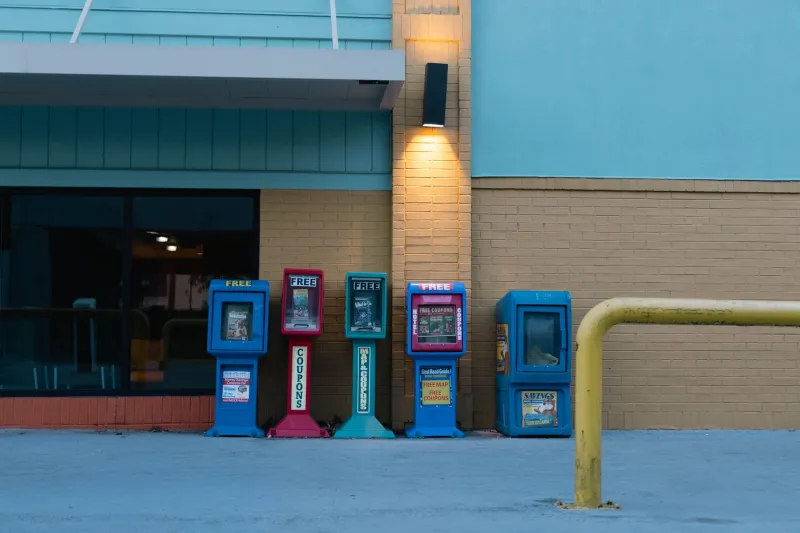
At 7:42 on a Saturday morning in 2026, a Facebook Marketplace listing pops up in a Cincinnati suburb: "Curb alert — free, first come first served. Lamp works. Cat not included." By 7:51, three people have commented "interested," one has asked if the lamp is still available, and someone else has posted a gif of a raccoon sprinting toward a trash can. The lamp is gone by 8:15. The cat, presumably, remains.
Welcome to the curb alert economy, where the stuff you were about to haul to Goodwill becomes a tiny local event. In 2026, free is not just a price. It is a genre of content, a test of manners, and — occasionally — a 40-minute drive for a taxidermy fox.
The 40-Minute Drive for a Free Fox
The taxidermy fox is not a hypothetical. Scroll through enough Buy Nothing groups, Nextdoor posts, and Facebook Marketplace free listings and you will find the kind of objects that make you pull over and reconsider your life choices. A mounted fox in a tiny vest. A wedding dress in a trash bag. A half-finished puzzle of the Las Vegas skyline. A box labeled "mystery cables, probably important." A lamp shaped like a leg. Two lamps shaped like legs. A bag of mismatched Tupperware with one lid that fits exactly nothing.
The people who claim these things are not always desperate. Often they are curious. Sometimes they are bored. And occasionally they are the kind of person who sees "free piano, you haul" and thinks, "I have a truck and a dream." The curb alert economy runs on that particular combination of optimism and poor spatial planning.
What makes it work is the pickup choreography. The seller puts the stuff at the curb. The buyer shows up, inspects it like a museum curator, and either takes it or leaves it. No small talk. No haggling. No receipt. Just a stranger's old blender becoming your new blender while a neighbor watches from behind a curtain and pretends not to.
No Holds, No Ghosts, No Judgment
If you spend five minutes in a local free-stuff group, you will find etiquette wars. Should you say "interested" or "next in line"? Is it rude to ask for dimensions? Can you claim something and then not show up? What does "porch pickup" actually mean, and why does it always involve a cooler?
The unwritten rules are simple but fiercely enforced. Don't ghost. Don't ask "is this available?" and then vanish into the mist. Don't show up early. Don't ring the doorbell. Don't take the free item and then try to negotiate for the thing next to it. And never, ever take the cat.
Buy Nothing groups add a layer of civic sweetness. The project, which started in the early 2010s, turns neighborhoods into gift economies. People post "ISO" — in search of — requests for everything from moving boxes to a specific size of screw. They offer "blessings" and "gifts." They thank each other with emojis. It is the internet doing the thing it was supposedly built for: connecting people who have too much stuff with people who need exactly that stuff, plus a little chaos.
The Spectator Sport of Free Stuff
But the real engine of curb alert culture is not need. It is watching. A good free listing is a tiny reality show with a comment section. Someone posts a photo of a futon with a visible stain and the caption "free, no stains." The replies arrive like clockwork: "That's a stain." "Still available?" "Can you deliver?" "I can be there in 20." "Is it haunted?"
The screenshots travel. A listing for "free dirt, you haul" becomes a group chat meme. A post offering "one (1) haunted mirror, probably not haunted" gets shared 4,000 times. A curb pile with a perfectly good office chair and a single roller skate becomes a scavenger hunt. People who would never stop for a garage sale will absolutely slow down for a free pile with a sign that says "TAKE IT ALL."
In 2026, that spectator energy has its own vocabulary. There are "curb alert bingo" cards. There are TikTok compilations of the weirdest free listings. There are people who follow local free groups in cities they do not live in, just to see what strangers are giving away. It is oddly soothing. In a feed full of bad news, a free lamp is a small, stupid victory.
The Weird Stuff Is the Point
The listings themselves are a folk art form. Some favorites from the free-stuff frontier:
- A taxidermy fox in a child's raincoat, listed as "good listener."
- A box of "vintage remote controls, no guarantee which TV they belong to."
- A single dining chair with the note "three more available if you dig."
- A treadmill that "works but is loud and mean."
- A bag of assorted cables labeled "the drawer of shame."
- A full set of encyclopedias, "great for crafting or starting a fight at a yard sale."
The humor is part of the appeal. So is the honesty. Curb alerts are one of the few corners of the internet where people openly admit they are trying to get rid of something weird. There is no polished product page. There is just a photo, a curb, and a stranger's hope that someone else wants this thing more than they want the space.
A Small, Strange Lesson in Generosity
Underneath the jokes, something quietly decent is happening. Every curb alert is a tiny act of trust. Someone leaves a usable object on the street and assumes a stranger will take it rather than trash it. Someone else drives across town and assumes the thing will still be there. Most of the time, both people are right.
It is not a perfect system. People flake. People grab things they do not need. People leave a mess at the curb and blame the next person. But the baseline is generosity, or at least the avoidance of waste. In a country that runs on buying more, a free pile is a small rebellion. It says: this thing still has a life. Maybe it is your life now.
So the next time you see a curb alert for a free lamp, a box of cables, or a taxidermy fox in a raincoat, do not judge. Just check the comments. Someone is already on the way. Bring a truck, a friend, and low expectations. And if the cat is included, maybe keep driving.