Numbered and Unhinged: Inside America’s Small-Town Rubber Duck Racing Circuit
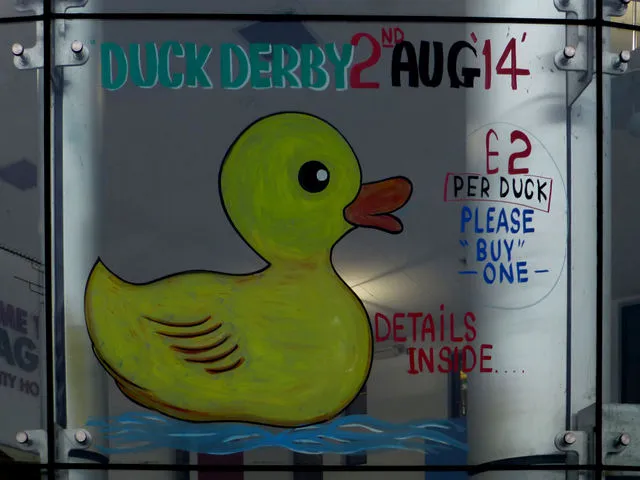
Photo: Kenneth Allen , CC BY-SA 2.0, via Wikimedia Commons
On a Saturday morning in a town you’ve probably never heard of, a dump truck backs up to a creek, a fire hose starts pumping, and several thousand rubber ducks get released into the water like a very cheerful invasive species. This is not a drill. It’s a duck derby — and in 2026, these charity races have become one of America’s most delightfully chaotic small-town spectacles.
The format sounds simple: adopt a numbered rubber duck, send it down a marked stretch of water, and hope it crosses the finish line first. But anyone who has stood on a muddy bank watching a flock of bath toys bob into a logjam knows the truth. Duck derbies are part plumbing project, part parade, and part aquatic contact sport. And somehow, they keep getting bigger.
A Very Serious Race for Very Unsinkable Athletes
The ducks are the stars, but they are not athletes. They are molded plastic, roughly the size of a soap dish, and utterly indifferent to strategy. That’s the charm. A duck doesn’t train. It doesn’t taper. It doesn’t read the current. It just floats, spins, and occasionally gets flipped by a gust of wind while a crowd of several hundred people screams as if it just won the Kentucky Derby.
Most derbies sell “adoptions” rather than entries — a few dollars per duck, with proceeds going to a local food bank, animal shelter, youth sports league, or volunteer fire department. The ducks are numbered so racers can track their toy in the water and organizers can match winners to prizes. The prizes are usually modest: gift cards, a trophy, maybe a year’s worth of bragging rights at the diner. The real currency is the story you get to tell afterward.
In 2026, the races have picked up a distinctly viral rhythm. Organizers post heat sheets like they’re announcing a music festival lineup. Local businesses sponsor “celebrity ducks” with tiny custom capes or hats. Someone always makes a bracket. Someone always loses money on a duck that gets stuck behind a rock for eleven minutes.
The Logistics of Herding Bath Toys
Here’s the part the spectators don’t see: the prep work is absurd. Organizers don’t just dump a box of ducks into a creek and hope for the best. They walk the course weeks in advance, looking for snags, shallow spots, storm drains, and any place a duck could stage a quiet rebellion against the current. They set buoys, rope off the finish line, and recruit volunteers with nets, rakes, and the patience of people who have done this before.
Then there’s the release. Some derbies use a large hopper or a chute. Others use a pump system that flushes the ducks into the water in a controlled torrent. The goal is a fair start — or at least a start that looks fair enough that nobody demands a recount. Because yes, people do demand recounts. Rubber duck racing may be silly, but small-town rivalries are not.
Duck recovery is its own sport. After the race, volunteers wade in with long nets and corral the ducks into bins, bags, and the backs of pickup trucks. The ducks get dried, counted, and stored for next year. A few always escape. Somewhere in America right now, there is a faded rubber duck living its best life in a drainage ditch, having outsmarted every net in the county.
Kayak Cams and the Viral Finish Line
The biggest upgrade in recent years has been the camera work. Derbies used to rely on a guy with a megaphone and a decent view of the bend. Now, organizers mount GoPros on kayaks, strap phones to volunteers, and livestream the whole thing to Facebook or YouTube. The result is low-budget, high-drama broadcasting: shaky footage of ducks bumping into each other, a kayaker whisper-narrating the leaderboard, and a finish-line shot that is somehow more tense than most reality TV finales.
That footage travels. A duck getting stuck in an eddy can become a local meme by dinner. A photo-finish between two numbered toys can spark a week of arguments at the hardware store. The races are not trying to go viral — they’re trying to raise money for the library — but the internet loves a stakes-free contest with an underdog and a very small trophy.
Bragging Rights, Rivalries, and the Fundraising Ledger
What makes the 2026 duck derby boom interesting is that it’s not just about the ducks. It’s about the towns. Neighboring communities have started comparing adoption numbers, course lengths, and prize packages. A fire department that raises $8,000 one year hears about the church group two towns over that raised $9,500 — and suddenly there’s a planning meeting. The rivalry is friendly, but it is real.
Local leagues are forming in some places, with spring and fall heats, season standings, and a championship race that draws spectators from three counties. Sponsors want their logos on the ducks. Vendors sell funnel cakes and duck-shaped cookies. Kids decorate their own ducks for a side contest that has absolutely no rules and somehow still produces controversy.
And underneath all of it is a simple, sturdy fundraising engine. Duck adoptions are cheap enough that almost anyone can play. The overhead is low. The photos are adorable. The event is family-friendly, weather-dependent, and just unpredictable enough to keep people coming back. In a time when so much of local life has moved online, a duck race gets people standing shoulder to shoulder on a creek bank, squinting at plastic toys, yelling encouragement that the toys cannot hear.
Why the Duck Keeps Winning
The rubber duck derby works because it asks almost nothing of the audience and gives back a full afternoon of low-stakes joy. You don’t need to know the rules. You don’t need to be athletic. You don’t even need to win. You just need to show up, pick a number, and watch a few thousand bath toys drift toward a finish line like a very slow, very determined parade.
So if you see a notice for a duck race in 2026 — a handwritten flyer at the feed store, a Facebook post from a volunteer fire department, a cluster of kayakers with GoPros — go. Bring a lawn chair. Adopt a duck. Cheer for number 412 even though you have no idea who adopted it. Somewhere between the pump truck and the finish-line net, you’ll understand why small towns keep doing this. It’s ridiculous. It’s wholesome. And it floats.